
Close Menu
  • HOME
  • HEALTHY AGING
  • FITNESS
  • HEALTH LIBRAY
    • SUPPLEMENT
    • NUTRITION
  • BLOG
  • ABOUT US
  • CONTACT US

Subscribe to Updates

Get the latest news from Renew Man Health

Subscription Form
Facebook X (Twitter) Instagram
Renew Man Health
  • HOME
  • HEALTHY AGING
  • FITNESS
  • HEALTH LIBRAY
    • SUPPLEMENT
    • NUTRITION
  • BLOG
  • ABOUT US
  • CONTACT US
Facebook X (Twitter) Instagram
Renew Man Health
Healthy Aging​

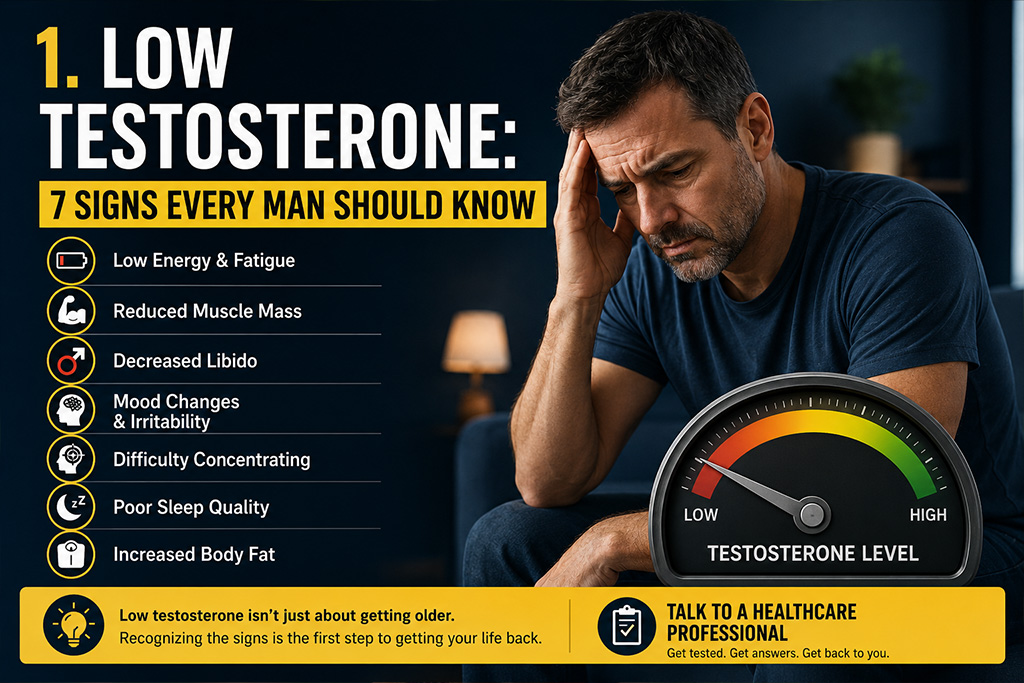
Low Testosterone: 7 Signs Every Man Should Know

renewman By renewmanJuly 8, 2026Updated:July 8, 2026No Comments2 Mins Read
Facebook Twitter Pinterest LinkedIn Tumblr WhatsApp VKontakte Email
Share
Facebook Twitter LinkedIn Pinterest Email

Testosterone does a lot more than most men realize. It shapes energy, mood, muscle, libido, and even how sharp your thinking feels day to day. Levels naturally decline with age, typically starting in your 30s, but for some men the drop is steep enough to affect quality of life well before retirement is on the radar.

The tricky part is that low testosterone rarely announces itself with one obvious symptom. Instead, it shows up as a collection of smaller changes that are easy to blame on stress, poor sleep, or “just getting older.”

Here are seven signs worth paying attention to:

1. Persistent fatigue that doesn’t improve with rest or a good night’s sleep.

2. A noticeable drop in sex drive or fewer spontaneous erections.

3. Difficulty building or maintaining muscle despite consistent training.

4. Increased body fat, especially around the midsection.

5. Mood changes such as irritability, low motivation, or a flatter emotional baseline.

6. Trouble concentrating or a general sense of mental fog.

7. Thinning hair or reduced body hair growth.

None of these symptoms alone confirms low testosterone, since they overlap with thyroid issues, sleep apnea, depression, and simple lifestyle factors. That’s exactly why guessing isn’t useful. A simple blood test, usually drawn in the morning when testosterone peaks, gives a clear picture of where you actually stand.

If you’re noticing two or three of these signs together and they’ve been building for months rather than days, it’s worth a conversation with a healthcare provider who specializes in men’s hormone health. Catching a hormonal imbalance early makes it far easier to address, whether the solution ends up being lifestyle changes, treating an underlying condition, or a structured hormone therapy program.

featured
Share. Facebook Twitter Pinterest LinkedIn Tumblr WhatsApp Email
Previous ArticleTop 7 Ways Men Over 50 Can Revitalize Strength and Health Naturally
Next Article TRT 101: What Testosterone Replacement Therapy Actually Involves
renewman
  • Website

Related Posts

Digital Detox for Focus: Reclaiming Your Mental Clarity and Attention

July 13, 2026

The Longevity Blueprint: Small Daily Habits That Add Years to Your Life

July 13, 2026

Mastering the Mind: Stress Management and Emotional Resilience

July 13, 2026

5 Core Strategies to Age with Vitality: Staying Active After 50

July 13, 2026

Comments are closed.

Latest Posts

Shielding Your Arteries: The Proactive Guide to Preventing Stroke and Heart Attack

July 13, 2026

Digital Detox for Focus: Reclaiming Your Mental Clarity and Attention

July 13, 2026

Gut Health and Longevity: The Best Probiotics and Prebiotics for Men

July 13, 2026

Metabolic Conditioning: How to Burn Fat and Keep Muscle After 50

July 13, 2026

The Testosterone-Boosting Diet: Micronutrients Men Over 50 Need

July 13, 2026

The Longevity Blueprint: Small Daily Habits That Add Years to Your Life

July 13, 2026
  • Facebook
  • Twitter
  • Instagram

Subscribe to Updates

Get the latest creative news from SmartMag about art & design.

Subscription Form
Facebook X (Twitter) Instagram
  • About Us
  • Contact Us
  • Privacy Policy
  • Disclaimer
  • Term of Use
© 2026 All rights reserved renewmanhealth.com.

Type above and press Enter to search. Press Esc to cancel.